Greater Rochester Majority Delegation Highlights FY2027 State Budget Investments in Rochester & Monroe County’s Economy and Families
Investments in energy affordability, housing construction, education, safety, universal childcare, historic Baden Street settlement and the Rochester-Monroe Transformation Initiative to uplift communities and reduce costs to taxpayers
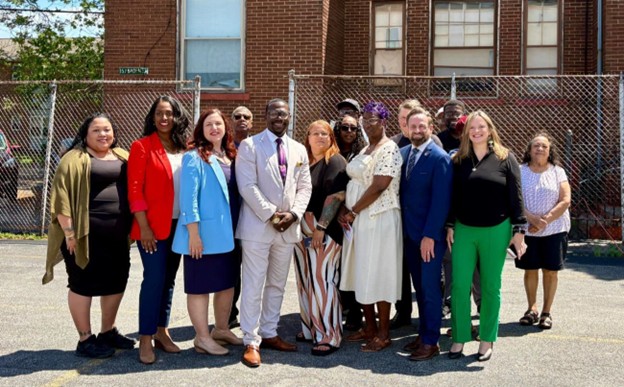
Today, Assemblymember Harry B. Bronson (AD-138), Senator Samra Brouk (SD55) and Assemblymembers Jen Lunsford (AD-135), Sarah Clark (AD-136), and Demond Meeks (AD-137) held a press conference to announce robust investments for Rochester and Monroe County through the FY27 NYS Enacted Budget.
This year’s budget prioritized relief for families burdened by high costs on everyday goods, such as child care and car insurance, protecting New York’s values and ensuring communities and neighborhoods have the support and investments they need to thrive with provisions to address skyrocketing utility bills and persistent housing shortages with adjustments to the State Environmental Quality Review Act (SEQRA) to increase housing construction. Other measures include investments to limit local collaboration with federal immigration officials (ICE), improvements to healthcare policy and mental healthcare.
Working together, the Greater Rochester Majority State Delegation once again brought home record funding for Rochester and Monroe County, with significant funds to redevelop the Stadium and High Falls district to bolster tourism, economic development and community revitalization, as well as an additional $20 million in AIM funding and a historic capital investment of $2 million dollars to strengthen and expand Baden Street Settlement, a critical human services provider in Rochester’s Northeast neighborhoods.
This budget reflects the priorities of people in the district, such as strong public education, middle class tax relief, immigration reform that protects hardworking people, and safe streets.
Investments include:
- 2% Increase in Foundation Aid for public schools
- Universal Child Care pilot in Monroe County
- $15 million in base AIM funding and an additional $20 million as part of the severely distressed cities fund
- Daniel’s Law Pilot for Rochester
- Tuition freezes for in-state residents at SUNY regional campuses
- Reforming SEQRA requirements to speed up homebuilding
- Increased scrutiny of utility company profits and rates, and one-time POWER rebate checks to ratepayers
- Funding for SNUG & GIVE community-based anti-violence programs to continue the trend of reduced crime and violence
- $300 million for the Rochester-Monroe Transformation Initiative to revitalize the Stadium and High Falls district in downtown Rochester
- Strengthening protections for youth on social media and gaming platforms
- Lowering car insurance premiums through new safeguards that benefit policyholders
- Raising eligibility for the Senior Citizens Homeowners’ Exemption and the Disabled Homeowners’ Exemption
- Preventing SNAP theft with funds to upgrade NY’s EBT cards
“This year’s New York State budget is an investment in a more affordable, equitable New York and demonstrates our shared commitment as a State Delegation to uplifting every corner of Rochester and Monroe County by increasing opportunities for our families, businesses and communities,” said Assemblymember Harry B. Bronson. “Through these initiatives we’re building a stronger middle class, championing workforce development and continuing education programs, investing in a robust economy centered around the jobs of today and tomorrow, and ensuring families have their needs met. I am proud of the work we’ve done to deliver a budget that protects New York’s values, invests in our priorities and offers relief from high costs on everyday items.”
“While the federal administration cut funding for critical programs, New York State delivered a budget with meaningful investments for Rochester. We increased Foundation Aid funding by 2 percent for every school district in SD-55; received $88.2 million in AIM funding, $15 million in TMA, and an additional $20 million in aid for Rochester; enacted protections for immigrants and accountability measures for ICE; passed substantial utility reforms; fought for a 2.7% targeted inflationary increase for the human services sector; won a $250k investment in the Doula expansion grant program to increase access to maternal care resources,” said Senator Samra Brouk, “and secured another historic state investment of $8 million for Daniel’s Law pilot programs to help develop compassionate responses for individuals in crisis across the state. Thank you to my colleagues in the Greater Rochester Delegation for helping deliver the investments that Rochester needs to thrive.”
“Alongside my state delegation colleagues, we went to bat for Monroe County to achieve record investments into our city, prioritize the affordability needs of our community members most in need, support our students, and increase the quality of life for our neighbors. I want to thank my colleagues for their steadfast support of our community and I’m grateful that our partnership proved fruitful for Rochesterians in this year’s budget,” said Senator Jeremy Cooney. “Beyond the funding itself, this budget takes important steps to make life more affordable, expand access to housing and child care, improve public safety, and ensure our most vulnerable residents continue to have the support they need. These achievements are the result of sustained advocacy and a shared commitment to building a stronger future for our region. I am grateful to my delegation colleagues and everyone who helped make this progress possible, and I look forward to continuing our work to deliver for the people of Rochester and Monroe County.”
“This year's budget once again put New York families first, centering on affordability and delivering results that put money back in New Yorkers' pockets,” said Assemblymember Jen Lunsford. “The compromises we made on auto insurance, which pulled heavily from a bill I sponsored, ensure that insurance companies will be required to put people over profits while reducing fraud, resulting in lower premiums for New York drivers. We invested an additional $1.5 Billion in hospitals, nursing homes and assisted living facilities that were the target of federal cuts to support care for our most vulnerable residents. And we secured $1 Billion for a second round of Sustainable Futures Fund investments in renewable energy projects. While the budget fight took longer than any of us wanted it to, that time was spent fighting to make sure our region got its fair share-- and we succeeded! Between the $35 Million infusion of direct state aid, $300 Million in capital and the $20 Million universal childcare pilot, our delegation ensured that Monroe County's needs were met and that we are well positioned to take advantage of new opportunities this year, and into the future.”
“This year’s state budget delivers meaningful results for Rochester and Monroe County and reflects the dedicated work of our delegation and community,” said Assemblywoman Sarah Clark. “I am proud to have partnered with my colleagues in the Greater Rochester Majority State delegation and local leaders to secure investments that will strengthen neighborhoods, support working families, and create new opportunities all.”
“This year’s budget recognizes the needs of our communities, allowing policy-driven changes and direct investments in Rochester’s economic future. This budget is about steadily furthering opportunities for New York families. We continue to invest heavily in child care relief for working parents and support for our youth at every stage of life,” said Assemblyman Demond Meeks. “We took strong measures against the pipeline of untraceable ghost guns to boost public safety efforts and to protect our young people from digital harm. We fought hard in Albany for funding for our grassroots organizations, delivered aid to local libraries, improved opportunities for healthcare workers and added support to neighborhood safety nets. We also strengthened health food buying power for families at the Rochester Public Market and many curbside markets. By bringing resources directly to our neighborhoods, we are uplifting New Yorkers.”